
Reimagining Global Supply Chains amid Uncertainty: The 20th International Conference on Operations and Supply Chain Management Held at Queen's University Belfast
Global supply chains are undergoing profound change. Geopolitical shifts, evolving market demand, the green transition and artificial intelligence are becoming increasingly intertwined, challenging the long-standing management logic centred on cost and efficiency. Supply chains are gradually emerging as a critical capability through which companies sense change, mobilise resources and reshape their business models.
From 26 to 29 July, the 20th International Conference on Operations and Supply Chain Management (ICOSCM 2026), jointly organised by the Association of Supply Chain and Operations Management (ASCOM), Queen's Business School and the CEIBS Institute of Supply Chain Innovations, was held in Belfast, UK. Under the theme “Reimagining Supply Chains: Global Collaborations and Innovations under Uncertainty”, the conference brought together scholars and industry leaders from around the world to exchange ideas on artificial intelligence, supply chain resilience, business model innovation and industry–academia collaboration.
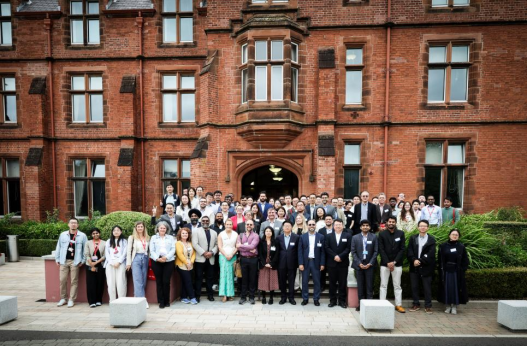
Group photo of conference participants
Before the main conference programme, Professor Archie Clements, Pro-Vice-Chancellor for Research and Enterprise at Queen's University Belfast; Professor M. N. Ravishankar, Dean of Queen's Business School; and Dr Hangfei Guo, Conference Co-Chair, delivered welcome remarks. This was also the first time in its 20-year history that the conference had been held in Europe, creating a new platform for exchange between supply chain scholars and industry practitioners from Asia, Europe and North America.

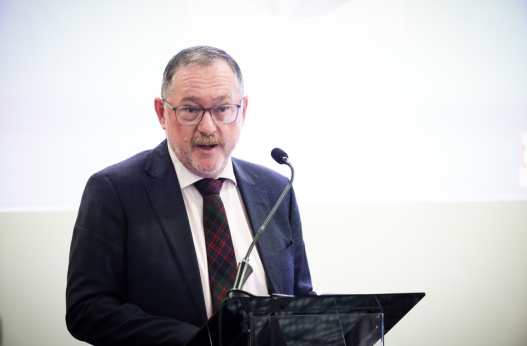
Prof. Archie Clements, Pro-Vice-Chancellor, QUB
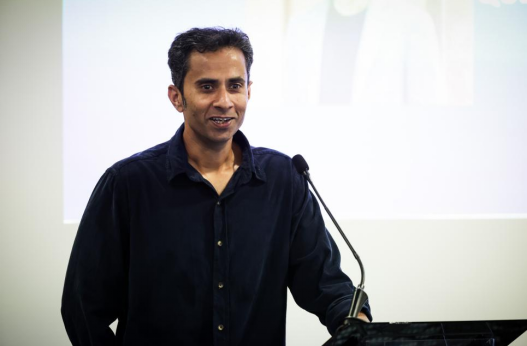
 Prof. M. N. Ravishankar, Dean of Queen's Business School
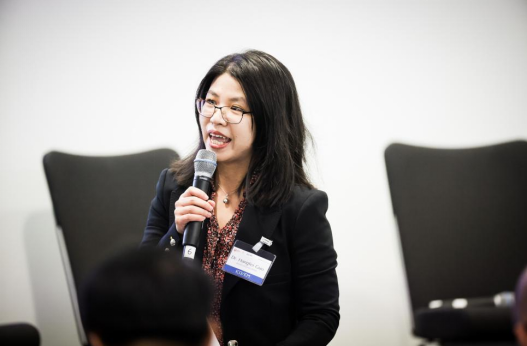
 Dr Hangfei Guo, Conference Co-Chair, QUB
Frontier Insights: Redefining Supply Chains under Uncertainty
Across six keynote speeches, speakers examined the new challenges facing supply chains from the perspectives of artificial intelligence, food rescue, digital twins, global network design and research methodology.
Professor Xiande Zhao, JD.com Chair Professor of Operations and Supply Chain Management at CEIBS and Director of the CEIBS Institute of Supply Chain Innovations, delivered a keynote speech entitled “AI Applications in Supply Chains and Business Model Innovation: Research Opportunities”. He noted that AI is moving from stand-alone tools towards end-to-end applications, connecting demand insight, product design, production coordination and logistics fulfilment, while reshaping firm boundaries, collaborative relationships and business models.
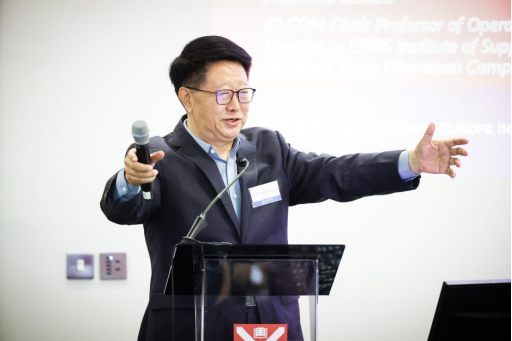
Prof. Xiande Zhao of CEIBS
Starting from the coexistence of food waste and food shortages, Professor Elkafi Hassini of McMaster University, Canada, introduced a decade of research conducted by his team on donation incentives, food bank operations, CrowdFeeding and food freshness identification. He argued that operations management should not focus solely on cost, but should also recognise the environmental resources, nutritional value and social significance embodied in food.
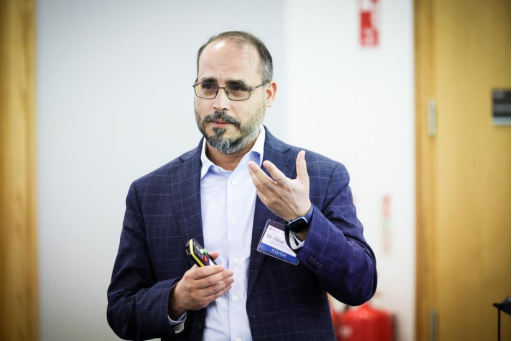

Prof. Elkafi Hassini of McMaster University
Drawing on the textile industry in late-19th-century Bombay, Professor Elliot Bendoly of The Ohio State University's Fisher College of Business showed how institutional arrangements and single performance measures detached from their specific context can undermine an organisation's existing flexibility and resilience. He reminded researchers not to move away from real-world problems simply because certain data are easier to obtain or particular methods more convenient. Instead, they should enter the field and remain grounded in operations management's fundamental concern with processes and practice.
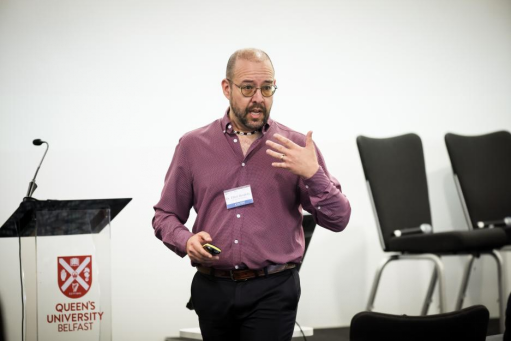
Prof. Elliot Bendoly of The Ohio State University
Professor Ganna Pogrebna of Queen's University Belfast delivered a keynote speech entitled “Digital Twins for Supply Chain Uncertainty: From Prediction to Strategic Experimentation”. She explained that a digital twin is not a static digital replica. It should be continuously updated and capable of simulating future scenarios, enabling companies to compare alternative courses of action and identify potential risks.
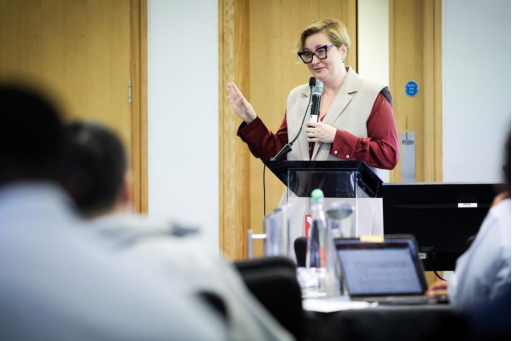

Prof. Ganna Pogrebna of Queen's University Belfast
Graham McCauley, Vice-President at Stryker, shared his industry observations in a keynote entitled “Redesigning Supply Chains for a Fragmented World”. The pandemic, tariff changes, extreme weather and cyberattacks have disrupted the old logic of pursuing low cost above all else.Companies must now make choices between globally concentrated operations, regionalised production and multi-node supply networks according to the characteristics of their industries.
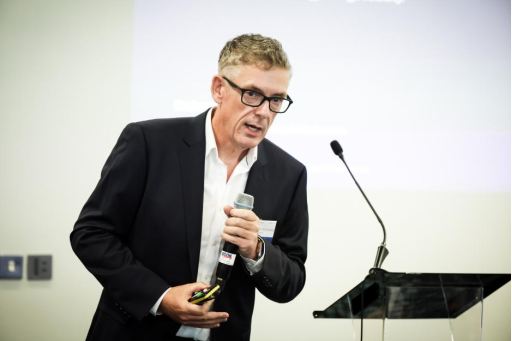

Graham McCauley, Vice-President at Stryker
Professor Rogelio Oliva of Texas A&M University turned the discussion towards research on digital transformation. He argued that researchers should not merely ask whether a technology “works”, but should also explain the conditions and mechanisms through which it produces results. Intervention-based research allows scholars to enter organisational settings and test and refine theory while participating in real transformation initiatives.
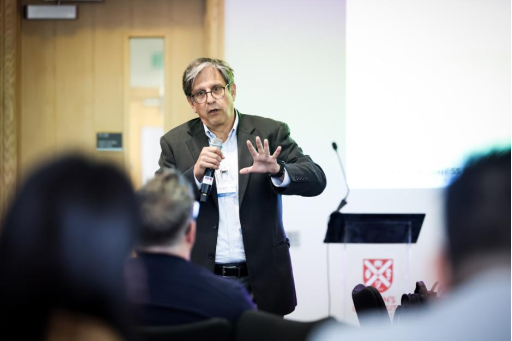

Prof. Rogelio Oliva of Texas A&M University
Addressing Shared Challenges: Exploring New Paths for Global Supply Chain Collaboration
The first panel discussion, entitled “Global Supply Chains under Uncertainty: New Research, Capabilities and Collaborations”, was moderated by Dr Sinéad Roden. The panellists included Professors Xiande Zhao, Elkafi Hassini, Elliot Bendoly and David Xiaosong Peng. They observed that supply chain models relying on a single region to serve the global market are becoming increasingly vulnerable. Companies need to establish more distributed resource networks and strengthen their ability to respond quickly and adjust dynamically.
The discussion also extended to artificial intelligence. While technology can improve the efficiency of data processing and knowledge transformation, it cannot replace an understanding of specific organisational contexts, nor can it independently resolve issues of trust and coordination between organisations. Problem identification, theory building and professional judgement therefore remain central to the value created by researchers.
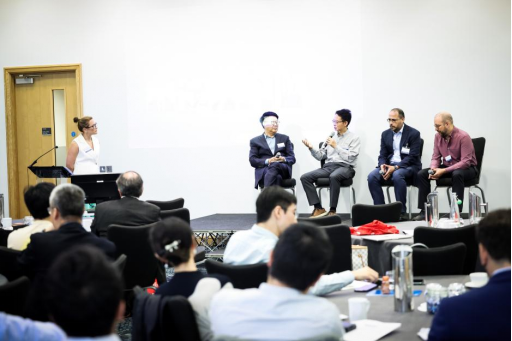
The first panel discussion
The second panel was moderated by Professor Ganna Pogrebna and brought together Graham McCauley, Dr Mateus do Rego Ferreira Lima, Dermot Leonard and representatives from Invest Northern Ireland. The panellists agreed that industry–academia collaboration should begin with real and clearly defined business problems. Trust can then be developed through small-scale experiments and interim results, while government agencies and innovation platforms can help connect resources and support the translation of research into practice.
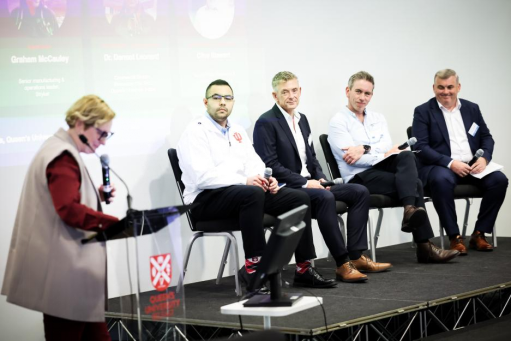
The second panel discussion
Grounded in Practice: Making Research Respond to Real Problems
The Intervention-Based Research Workshop led by Professor Rogelio Oliva brought the earlier discussions to the methodological level.
Professor Oliva stressed that researchers should clearly articulate the theoretical basis and expected outcomes of an intervention before it begins, document the changes that occur throughout the process, and identify new insights by examining discrepancies between actual results and theoretical expectations. Failure in business practice is not without research value. If the process is documented rigorously and transparently, it can still help researchers identify the boundaries of existing theories and formulate more meaningful questions.
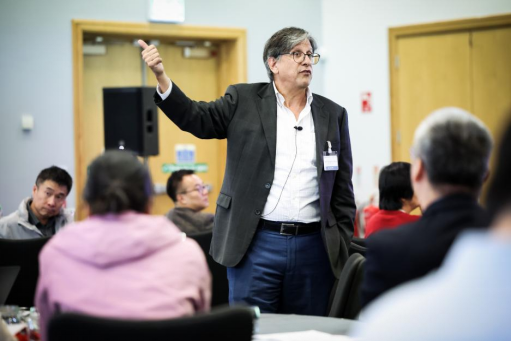
Intervention-Based Research Workshop
In a session led by the editorial team of the International Journal of Operations & Production Management (IJOPM), attention turned to how research findings can reach a broader audience. The editors introduced the journal's positioning, review process and submission requirements for its Impact Pathways section, and discussed with participants how stronger connections can be built between theoretical contributions and practical value.
The editors noted that research impact should not be treated as an additional statement written after a paper has been completed. It should instead be incorporated into the research design from the outset. As artificial intelligence changes the way research is conducted, scholars must pay even greater attention to research integrity and the quality of evidence, using technology to assist analysis rather than allowing it to replace original thinking.
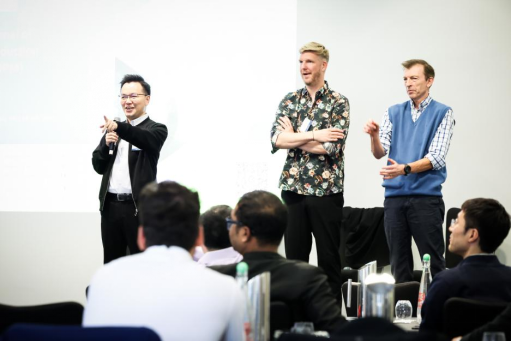
Publishing in IJOPM Workshop
Converging Perspectives: Extending the Frontiers of Supply Chain Research
The featured session on AI in supply chain management, chaired by Professor Zhiqiang Wang of South China University of Technology, focused on applications of artificial intelligence in production scheduling, order fulfilment, procurement and energy management. The research presented showed thatsuccessful implementation depends not only on the capabilities of the models themselves, but also on data foundations, process design and clearly defined responsibilities.
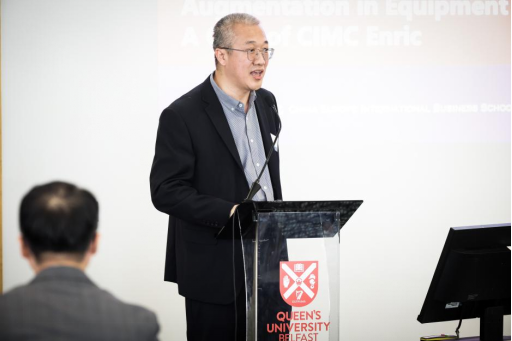
Prof. Zhiqiang Wang of South China University of Technology
The featured session on healthcare platforms, chaired by Professor Jagjit Singh Srai of the University of Cambridge, used examples including internet hospitals, integrated online and offline services, and customised 3D implants to explore how digital platforms connect hospitals, doctors, engineers and patients, as well as the resulting issues of trust, governance and equitable access to services.
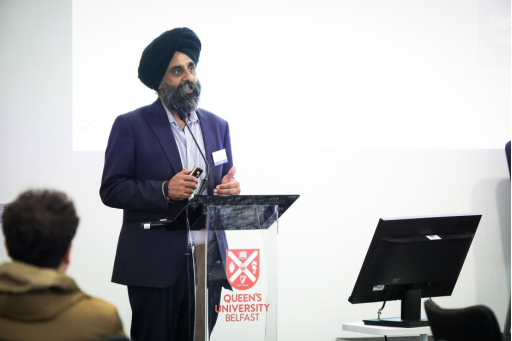
Professor Jagjit Singh Srai of the University of Cambridge
The RiSC+ special session, chaired by Dr Hangfei Guo, introduced a collaborative mechanism connecting academia, industry, government departments and international partners. RiSC+ brings together research expertise in areas including food, fashion, critical minerals, artificial intelligence and cybersecurity, helping interdisciplinary ideas develop into joint research initiatives and international collaborative projects.
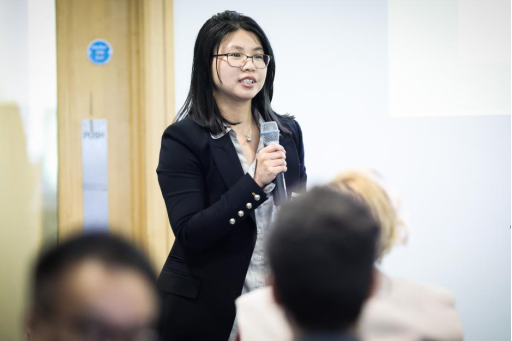
Dr Hangfei Guo of Queen's University Belfast
The conference also featured parallel paper sessions, Impact Pathways feedback sessions and a full-paper competition. Beyond the rigorous academic discussions, an Irish dancing performance at the conference dinner brought a relaxed and lively atmosphere to the international gathering.
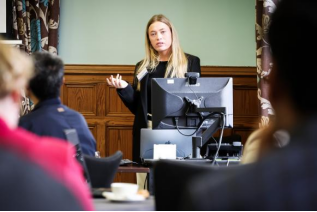
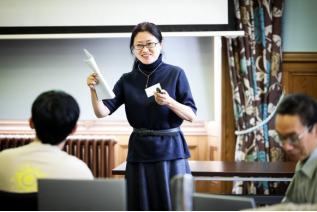
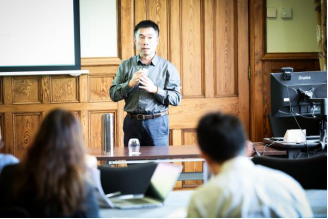
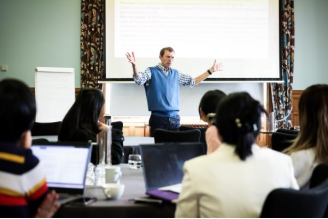
Parallel paper sessions
Looking Ahead: Next ICOSCM to Be Held in Vietnam
At the closing ceremony, the Xiande Zhao Best Paper Award and the JDM Best Paper Award were presented. The paper “Energy Price Uncertainty and the Market Value of Manufacturing–Energy Collaborations”, presented by Yuxiao Ye, received the Xiande Zhao Best Paper Award. The paper “Innovation Profiling and Supply Chain Resilience: Evidence from a Quasi-Natural Experiment Based on the Innovation Points System”, presented by Morris Ming Liu, received the JDM Best Paper Award.
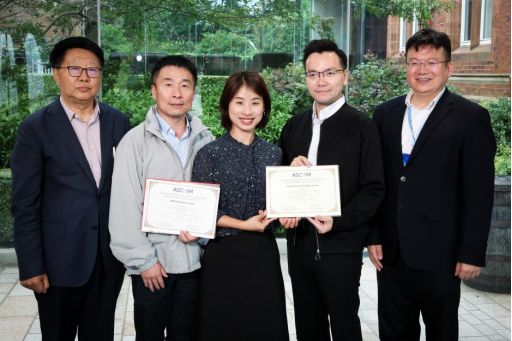
Professor Xiande Zhao, Founder of ASCOM, and Professor Baofeng Huo, President of ASCOM, with the award recipients
The closing ceremony also announced that the next International Conference on Operations and Supply Chain Management is scheduled to take place at VinUniversity in Vietnam in July 2027. From Belfast, a city with a rich industrial heritage, to Vietnam, where manufacturing is developing rapidly,the conversation on supply chain uncertainty, innovation and collaboration will continue.